If you have ever asked "what is ASMR?" after seeing a video of someone whispering into a microphone or slicing fruit in extreme close-up, this guide is for you. We make 1000 Cuts, a fruit slicer game built around cutting sounds, so we spend a lot of time around this topic. Here is what ASMR actually is, what sets it off, who feels it and what scientists have measured, with no hype and no miracle claims.
What does ASMR stand for?
ASMR stands for autonomous sensory meridian response. The name was proposed in 2010 by Jennifer Allen, a member of an online forum where people had been trying to describe a sensation they had felt for years but had no word for. The words were chosen to sound neutral and clinical rather than scientific, and the feeling is much older than the term.
What do ASMR tingles feel like?
People describe ASMR as a soft, static-like tingling that begins on the scalp or at the back of the head and moves down the neck, shoulders and spine, along with a feeling of deep calm. In the first large survey of people who experience it, published in 2015 by Emma Barratt and Nick Davis in the journal PeerJ, 41 percent of those with a consistent starting point said the tingles began at the back of the head and 29 percent said the shoulders. When the feeling was strong, half said it travelled down the spine.
It is not a shiver of excitement like the chills you get from music. Most people describe it as sleepy and pleasant, closer to having your hair played with, and it fades once the trigger stops.
What are the most common ASMR triggers?
The most common ASMR triggers are quiet, close-up sounds and slow, careful attention. The 2015 PeerJ survey of 475 people who experience ASMR found these trigger rates:
| Trigger | People who reported it |
|---|---|
| Whispering | 75% |
| Personal attention (a pretend haircut, exam or makeover) | 69% |
| Crisp sounds (tapping, crinkling, cutting) | 64% |
| Slow movements | 53% |
| Repetitive movements or tasks | about a third |
A 2023 study by Giulia Poerio and colleagues in Consciousness and Cognition built a checklist of 37 triggers and found that light physical touch was the most widely reported of all, endorsed by 98 percent of their sample. Five months later, 84 percent of people's answers were unchanged, so each person's triggers seem fairly stable.
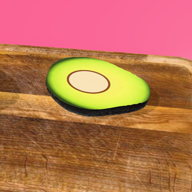
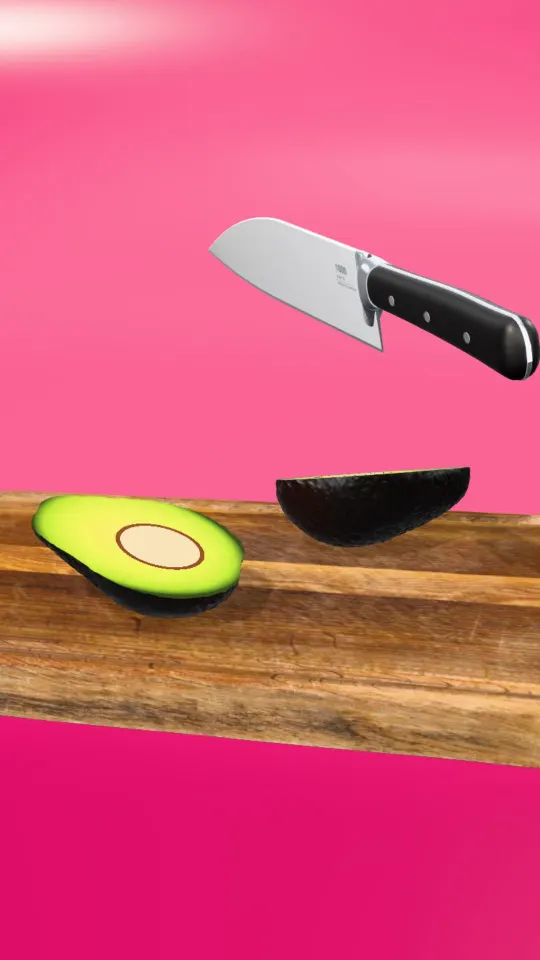
Cutting belongs in the "crisp sounds" family. The snap of an apple, the press of a knife through an avocado, the tap of the blade on the board: clean, detailed, repeating sounds that creators record with sensitive microphones. We cover that side in why fruit cutting videos are so satisfying.

Does everyone experience ASMR?
No. Nobody has a reliable figure for how many people feel ASMR tingles, because studies so far have recruited people who already know they have it. Numbers you may see online (20 percent, 60 percent) trace back to interviews and guesses, not measured samples.
What research can say is that the people who feel it tend to be more sensory-sensitive in general. In a 2022 study described by Poerio in The Conversation, ASMR responders reported being more easily overstimulated by noise and movement and more aware of their own bodies than non-responders. Many of them also reported misophonia, a strong dislike of certain everyday sounds, which fits the idea that ASMR and misophonia may be two ends of the same sensitivity.
Plenty of people never get the tingles but still enjoy ASMR videos as relaxing background sound, and they are probably the majority of the audience.
What does the research actually say?
The honest answer is that ASMR research is young, small and mostly based on self-report, but it has found some real, measurable effects:
- Heart rate. In a 2018 study in PLOS ONE, Poerio and colleagues put 112 people in a lab, half of whom experience ASMR. While watching ASMR videos, the ASMR group's heart rate fell by about 3.4 beats per minute on average, more than the control group's.
- Calm and alert at once. The same study found that ASMR participants reported feeling both calmer and more excited, and their skin conductance (a measure of arousal) went up, not down. ASMR seems to be a relaxed but attentive state, which is why Barratt and Davis compared it to "flow".
- The brain. A 2018 fMRI study led by Bryson Lochte in the journal BioImpacts found that during tingles, areas linked to self-awareness and social behaviour (the medial prefrontal cortex) and to touch (the secondary somatosensory cortex) were more active than during neutral moments.
- Why people use it. In the 2015 survey, 98 percent said they watched ASMR to relax and 82 percent said they used it to help them fall asleep.
Three caveats. The samples are small and not diverse. Participants knew what the study was about, so expectation plays a part. And none of this makes ASMR a treatment for anything: if sleep, anxiety or stress is a problem in your life, a doctor or mental health professional is the right place to start. An ASMR video is a pleasant way to spend ten minutes, nothing more.
ASMR you watch vs ASMR you make
Most ASMR is passive: a creator picks the sounds and the pace. A newer branch is interactive: tapping, slicing and cutting games put the trigger under your finger, and a phone adds a small vibration on every cut that a video cannot.
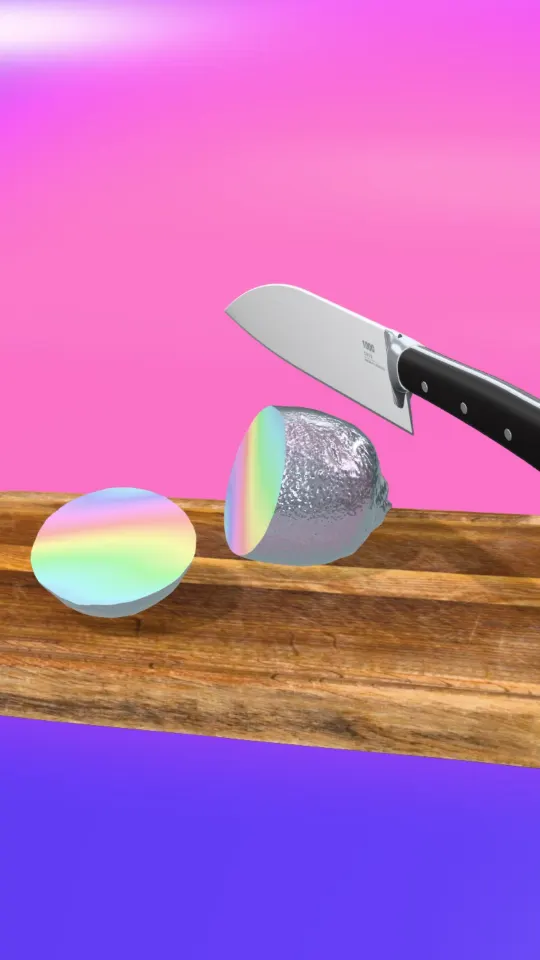
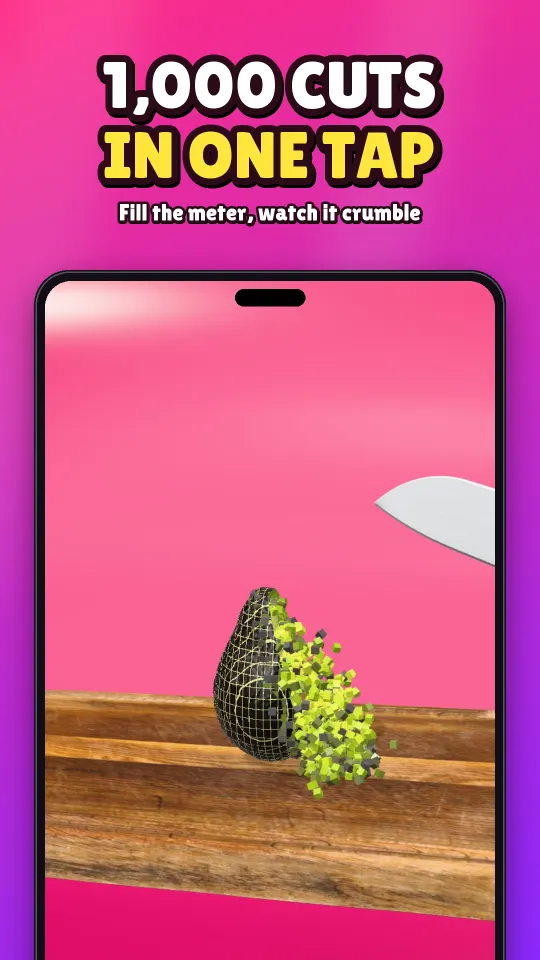
That is the idea behind 1000 Cuts, our ASMR game for Android. Tap to chop a real scanned avocado, kiwi or apple exactly where you want, hold to chop fast, then trigger 1,000 cuts and watch the fruit crumble into a pile. It is the playable version of the "1 cut vs 1,000 cuts" reels, which are rendered offline; the game does it in real time. Our list of the best ASMR games for Android covers the other kinds of satisfying game too.
How to try ASMR if you never have
- Use headphones at low volume. Most triggers are quiet and detailed, and phone speakers flatten them.
- Try several trigger types. Whispering, tapping, cutting, page turning, hand movements. Many people only respond to one or two.
- Give it a few minutes. Tingles usually build; skipping around works against them.
- Don't chase it. Trying hard to feel something is the opposite of relaxing. If nothing happens, the videos can still be a nice five-minute break.
Frequently asked questions
What is ASMR in simple terms?
ASMR is a calm, pleasant tingling that some people feel on their scalp and neck in response to soft sounds and sights such as whispering, tapping, crisp cutting sounds and slow, careful hand movements.
What are the most common ASMR triggers?
Whispering, personal attention, crisp sounds and slow movements were the top four in the 2015 PeerJ survey. A 2023 checklist study found light physical touch was the most widely shared trigger of all.
Does everyone feel ASMR?
No. There is no reliable figure for how many people experience the tingles, and some people find typical ASMR sounds unpleasant. Many people who never feel tingles still enjoy the videos as relaxing sound.
Is ASMR scientifically proven?
Partly. Small studies have measured a lower heart rate, higher reported calm and distinct brain activity in people who experience ASMR, but samples are small and self-selected. It is not a medical treatment.
Why do cutting sounds trigger ASMR?
Cutting sounds are crisp, detailed and repetitive, the same qualities as tapping and crinkling, which are among the most common triggers. Close microphones make each cut sound near and precise.
Sources
Barratt, E. L. and Davis, N. J. (2015), "Autonomous Sensory Meridian Response (ASMR): a flow-like mental state", PeerJ 3:e851, peerj.com/articles/851. Poerio, G. L. et al. (2018), "More than a feeling: Autonomous sensory meridian response (ASMR) is characterized by reliable changes in affect and physiology", PLOS ONE 13(6): e0196645, journals.plos.org. Poerio, G. L. et al. (2023), "From touch to tingles: Assessing ASMR triggers and their consistency over time with the ASMR Trigger Checklist (ATC)", Consciousness and Cognition 115:103584, pubmed.ncbi.nlm.nih.gov/37820451. Lochte, B. C. et al. (2018), "An fMRI investigation of the neural correlates underlying the autonomous sensory meridian response (ASMR)", BioImpacts 8(4). Poerio, G. (2022), "If you love ASMR you might be more sensitive", The Conversation, theconversation.com.
Updated · By the 1000 Cuts team at DIGCY SARL AU