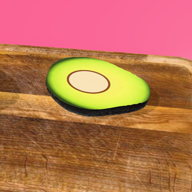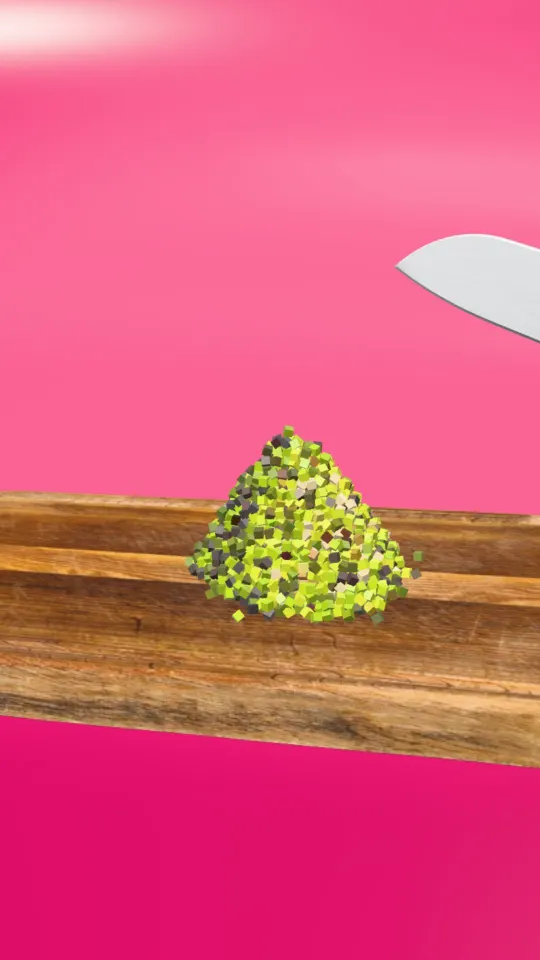
Faceless satisfying channels are everywhere on Shorts, Reels and TikTok: a blade gliding through jelly, a hydraulic press, a fruit falling into a thousand pieces. Nobody talks to the camera. Search for how they work and you find a wall of "this channel makes $40,000 a month" headlines, mostly from companies selling AI video tools. This guide sticks to what the platforms themselves publish. We make 1000 Cuts, a fruit slicer game born from this exact kind of clip, so we have watched the format closely.
What is a faceless satisfying channel?
A faceless satisfying channel is a video channel where the content, not a presenter, is the star: cutting, crushing, pouring, sanding or looping animations, usually with crisp sound and no talking.
Most of them fall into three groups:
| Type | How the clips are made | Main risk |
|---|---|---|
| Filmed | Real cutting, soap, sand or crafts on camera | Slow to produce |
| 3D rendered | Built and simulated in software like Blender | Long render times |
| Compiled | Other people's clips stitched together | Not monetizable under YouTube's reused content policy |
The first two are original work. The third is where most channels get into trouble, as the rules below show. If you want to know how the 3D kind is built, our guide to how satisfying 3D videos are made walks through the whole pipeline.
How do faceless satisfying channels make money?
They make money mainly from ads through the YouTube Partner Program (YPP), plus sponsorships, affiliate links or promoting their own product.
On YouTube, ad money only flows once a channel is accepted into YPP. YouTube Help lists the current ad-revenue thresholds as 1,000 subscribers plus either 4,000 qualified watch hours on public long videos in the last 12 months, or 10 million qualified Shorts views in the last 90 days. Only public Shorts watched in the Shorts Feed count; private, unlisted or deleted Shorts and views from ad campaigns do not.
Other platforms run their own creator funds with their own rules, which change often. Check each platform's help pages on the day rather than trusting a blog post.
The 2027 YouTube Partner Program changes
From 1 February 2027 the bar goes up for new channels, and Shorts earnings get a new condition for everyone.
YouTube Help states that new applicants will need 1,000 subscribers plus either 8,000 qualified watch hours in the last 365 days or 20 million qualified Shorts views in the last 90 days. Channels already in YPP keep their status. But to earn from the Shorts Creator Pool each month, every channel will need to keep 10 million qualified Shorts views over the last 90 days. Missing that number does not remove a channel from YPP or touch its long-video earnings.
For a Shorts-only satisfying channel, that is a big deal. A channel that dips below 10 million views in a slow quarter stops earning from Shorts until it climbs back.
The rules that sink most faceless channels
The biggest danger is not the face, it is originality. YouTube does not require you to appear on camera, but its monetization policies check whether the content is really yours.
Reused content. YouTube's channel monetization policy says channels that repurpose content already online without significant original changes are not eligible. It names compilations of clips with little or no narrative, and short videos compiled from other social media sites. Getting the original creator's permission does not change this.
Inauthentic content. In July 2025 YouTube renamed its "repetitious content" rule to "inauthentic content". It covers videos that look made from a template or feel mass-produced, including AI-generated content built from generic templates without original insight. A satisfying channel posting near-identical clips with no variation is exactly what this rule describes.
AI disclosure. YouTube asks creators to tick "AI use" for realistic altered or synthetic content. Obviously animated or fantastical scenes, like a rainbow cube being sliced, do not need the label.
The practical lesson: a channel that films or renders its own clips, varies each one and builds a clear series is on safe ground. A channel that downloads clips from TikTok and re-uploads them is not.
How much do faceless satisfying channels really earn?
Honestly: it depends on views and RPM, and for most channels the answer is little or nothing. RPM changes with country, season and audience. Anyone who quotes a typical figure without showing the channel's analytics is guessing, or selling something.
YouTube Help defines RPM as how much a creator earns per 1,000 views, after YouTube's share, counting all views including ones with no ad. So the maths is simple:
- Take the channel's monthly views.
- Multiply by its RPM.
- Divide by 1,000.
Here is a made-up example to show the shape of it, not real data. A Shorts channel with 10 million views a month and an RPM of 5 cents would earn 10,000,000 × $0.05 ÷ 1,000 = $500. The same views on long videos with a higher RPM would earn many times more. That is why a "viral" Short can pay so little.
Shorts money is also shared in a specific way. YouTube Help explains that Shorts Feed ad revenue goes into a monthly Creator Pool, each creator gets a share based on their engaged views, and monetizing creators keep 45% of their allocation. Shorts that use licensed music send part of their revenue to the music rights holders first.
Why the "faceless income" numbers online are so high
Most big numbers come from blogs and courses that sell AI video tools or coaching, so they have a reason to make the dream look easy.
They often show one outlier channel, skip the months of zero, and leave out the rules above. Treat any income claim without a named source and date as marketing. We wrote more about why these clips spread so fast in why satisfying videos go viral.
Satisfying videos vs a satisfying game
A clip is watched once; a game lets you do it yourself. That is why we built 1000 Cuts.
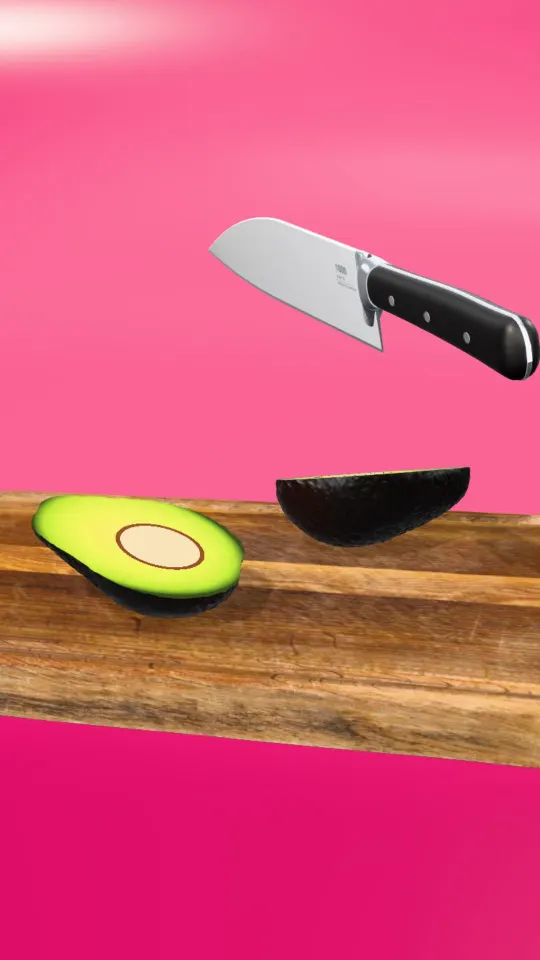
The Physics Candy "1 cut vs 1,000 cuts" reels are rendered offline, like the 3D clips in this article. 1000 Cuts is the real-time version: a satisfying game for Android with real 3D-scanned fruit. Tap to chop exactly where you want, hold and drag to chop fast, twist the board to dice, and when the ⚡ meter fills, trigger 1,000 cuts and watch the fruit crumble into a pile.
Frequently asked questions
Can faceless channels get monetized on YouTube?
Yes. YouTube does not require a face on camera. What matters is meeting the YPP thresholds and following the reused and inauthentic content policies, which reward original, varied work.
Are oddly satisfying compilations allowed to earn money?
Not usually. YouTube's reused content policy names compilations of clips with little or no narrative, and videos compiled from other social media sites, as not eligible, even with the original creator's permission.
How many views do you need to monetize Shorts?
Today, 10 million qualified Shorts views in 90 days plus 1,000 subscribers. From 1 February 2027, new applicants need 20 million, and every channel needs 10 million every 90 days to keep earning from the Shorts Creator Pool.
Do I need to label AI satisfying videos?
Only if they look realistic. YouTube asks for the "AI use" disclosure on realistic synthetic content; clearly animated or fantastical clips do not need it.
Sources
YouTube Help, "YouTube Partner Program overview and eligibility", support.google.com; "YPP updates 2027", support.google.com; "Channel monetization policies" (reused and inauthentic content), support.google.com; "Shorts monetization policies" (Creator Pool, 45%), support.google.com; "Revenue analytics: RPM vs CPM", support.google.com; "Disclosing altered or synthetic content", support.google.com. All checked 13 November 2026.
Updated · By the 1000 Cuts team at DIGCY SARL AU