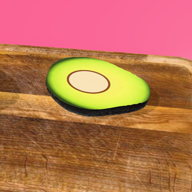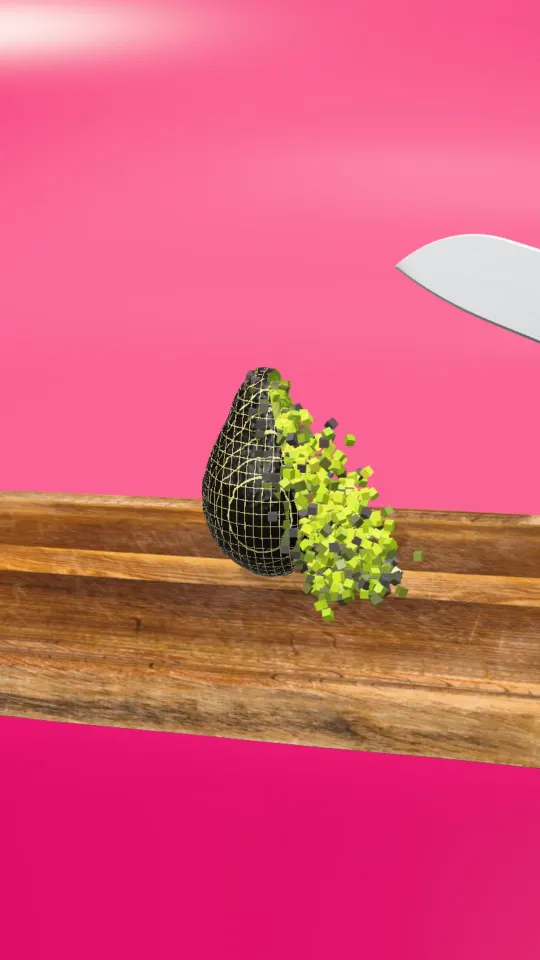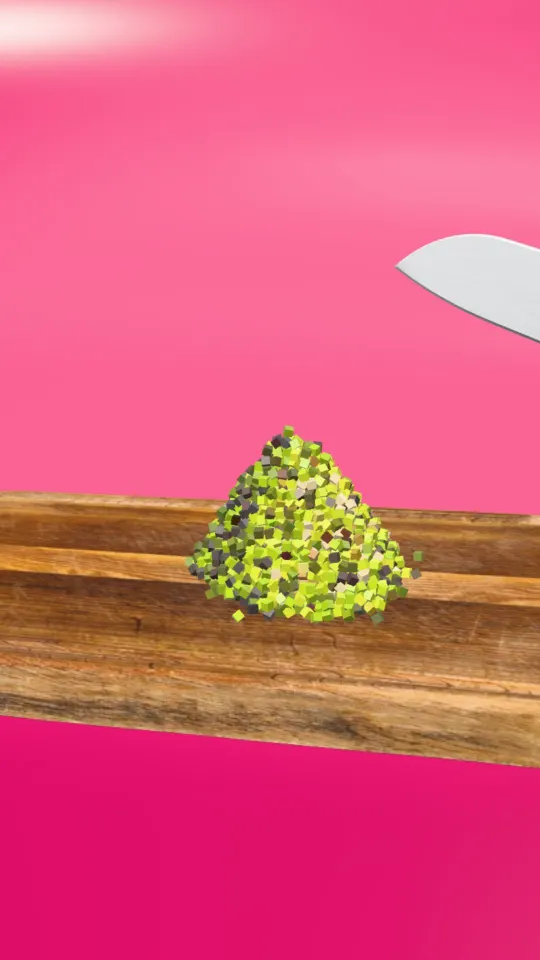
Ask why satisfying videos go viral and you will mostly hear "dopamine". The fuller answer is part psychology and part plumbing: what a clip does to the viewer, and what the feed measures while it plays. We make 1000 Cuts, a fruit slicer game born from "1 cut vs 1,000 cuts" reels, so we watch this format closely. Here is what holds up, using what TikTok, Instagram and YouTube publish about their own feeds, plus the research.
What makes a video "satisfying" in the first place?
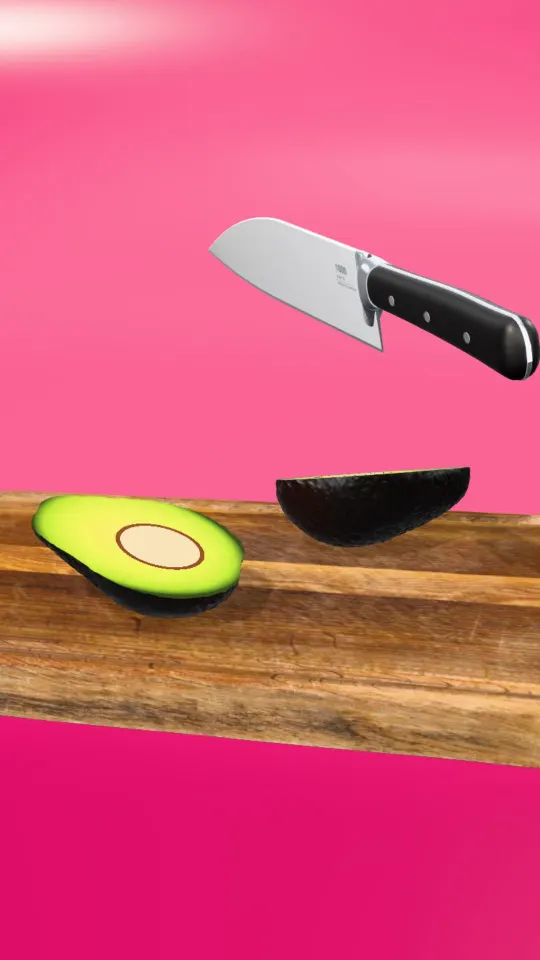
A satisfying video shows a simple process reaching a clean, complete result: a knife through a ripe avocado, soap breaking into cubes, a hydraulic press flattening something.
The common thread is a tiny story with a certain ending: start, process, payoff. You know in a second what will happen; the fun is watching it happen perfectly. That is different from ASMR, which is about a tingling response to sounds and close attention (our guide to what ASMR is covers that). Many clips are both, but plenty work on mute.
Why do satisfying videos go viral so easily?
They go viral because almost every trait of the format lines up with what short-video feeds count. Five traits do most of the work:
| Trait | What it does | Why the feed notices |
|---|---|---|
| Readable in one second | No setup, no context needed | Fewer people swipe away early |
| No language barrier | Works in any country, on mute | The clip can travel to any audience |
| Clear payoff at the end | Gives a reason to stay | More people finish the video |
| Clean loop | The end flows into the start | Replays happen almost by accident |
| "You have to see this" | Easy to send to a friend | Shares and sends spread it further |
What do TikTok, Instagram and YouTube say they reward?
The platforms say finishing, rewatching and sharing are among their strongest signals. They do not publish full formulas, so treat everything beyond their own words as educated guessing.
- TikTok. In its 2020 explainer on how the For You feed works, TikTok said that whether someone "finishes watching a longer video from beginning to end" is a strong sign of interest and weighs more than weaker signals. It also listed replays among the things that shape what you see, alongside likes, shares, comments and follows.
- Instagram. Instagram's ranking explainer says that for Reels its most important predictions are how likely you are to reshare a reel and to watch it all the way through.
- YouTube. YouTube's help pages say that, from 24 August 2026, views count the moment a video starts to play across all formats, including Shorts. Creator earnings in the YouTube Partner Program are still based on "engaged views", not raw starts.
So a Short's view counter can run far ahead of the people who really watched it.
Why do people watch satisfying clips more than once?
People rewatch satisfying clips because the payoff is short and the loop is seamless. When a ten-second clip ends on a pile of perfect cubes and jumps straight back to the whole fruit, the second play often starts before you decide anything. Good editors cut the last frame to match the first so the join is invisible.
There is also a "did I catch that?" pull: a clip that ends in a blur of 1,000 cuts invites a second look, which is exactly the beat the "1 cut vs 1,000 cuts" format is built on.
Why do people share them?
People share content that makes them feel something strong, and a good satisfying clip produces a quick jolt of surprise or awe. The best-known study here is by Jonah Berger and Katherine Milkman, published in 2012 in the Journal of Marketing Research. They looked at about 7,000 New York Times articles and which ones made the most-emailed list. Positive content was shared more than negative content, and content that sparked high-energy feelings such as awe was shared more than content that sparked low-energy feelings such as sadness.
That study was about news articles, not TikTok, so it is a clue rather than proof. But "send this to someone" is easy when a clip is short, wordless and impressive. Pause challenge videos push this further, because they come with a friend to beat built in.
Is there a downside to endless satisfying videos?
Yes: a feed of quick payoffs can leave you more bored, not less. In 2024 Katy Tam and Michael Inzlicht published seven experiments with more than 1,200 participants in the Journal of Experimental Psychology: General. People who skipped and switched between short videos reported more boredom, and less satisfaction and meaning, than people who watched one video through. Most participants were Canadian students, so the result may not apply to everyone.
One or two satisfying clips can be a nice pause; forty in a row tends to feel worse. If you want a short break that has an end, our piece on satisfying games to relax has ideas.
Satisfying videos vs playing the real thing
Watching is passive: someone else chose every cut. Playing puts the payoff under your own finger. That is why we built 1000 Cuts, a satisfying game for Android. You tap to chop a real 3D-scanned avocado, kiwi, lemon or apple exactly where you want, hold and drag to chop fast, twist the board to dice, and when the ⚡ meter fills you trigger 1,000 cuts and watch the fruit crumble into a pile. The Physics Candy "1 cut vs 1,000 cuts" reels are rendered offline; the game does it in real time on your phone. If you want to compare it with others, see our honest guide to fruit cutting games.
What this means if you make satisfying videos
If you post satisfying clips, the format rewards the basics more than any hack. (For the 3D side, see how satisfying 3D videos are made.)
- Show the object in the first frame. No intro, no logo, no talking.
- Make the payoff obvious and final. A pile, a perfect cube, a clean split.
- Match the last frame to the first so the loop is seamless.
- Record crisp sound, but make it work on mute. Many people scroll silently.
- Keep it honest. Viewers spot fakes fast, and a faked result breaks the whole point of the format.
No checklist can promise a viral video, and most clips stay small. For more on why the cutting kind lands, read why fruit cutting videos are so satisfying.
Frequently asked questions
Why are satisfying videos so popular?
They are quick to understand, need no language, end on a clean payoff and loop well. That makes them easy to finish, rewatch and share, which are the behaviours short-video feeds pay most attention to.
Do replays count as views on TikTok and YouTube Shorts?
On YouTube, views now count the moment a video starts playing, including Shorts, while creator earnings use engaged views. TikTok has said replays are one of the signals that shape what it recommends.
What is an oddly satisfying video?
It is a short clip of a simple process reaching a neat, complete result, such as slicing, crushing, pouring or sorting. The appeal is watching something predictable happen perfectly.
Is it bad to watch satisfying videos?
A few clips are a harmless break. A 2024 study found that rapidly switching between short videos left people more bored than watching one video through, so long scrolling sessions can feel worse than expected.
Sources
TikTok (2020), "How TikTok recommends videos #ForYou", newsroom.tiktok.com. Instagram, "Instagram Ranking Explained", about.instagram.com. YouTube Help, "How engagement metrics are counted", support.google.com. Berger, J. and Milkman, K. L. (2012), "What Makes Online Content Viral?", Journal of Marketing Research 49(2), 192–205. Tam, K. Y. Y. and Inzlicht, M. (2024), "Fast-forward to boredom: How switching behavior on digital media makes people more bored", Journal of Experimental Psychology: General, APA press release.
Updated · By the 1000 Cuts team at DIGCY SARL AU