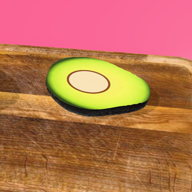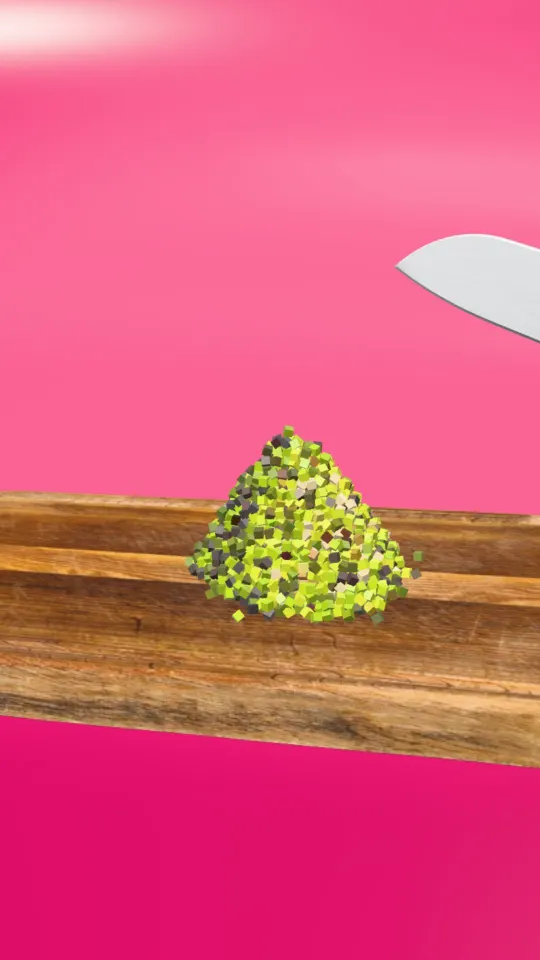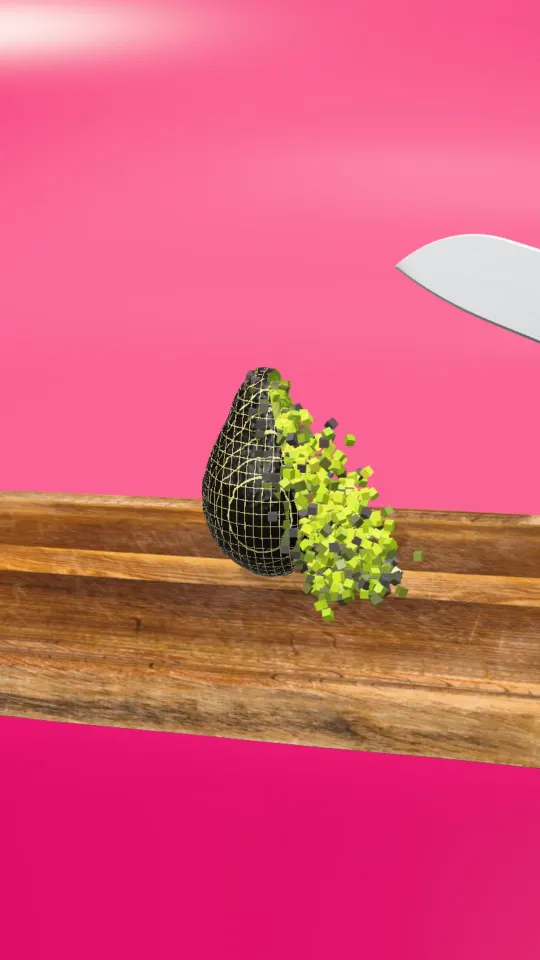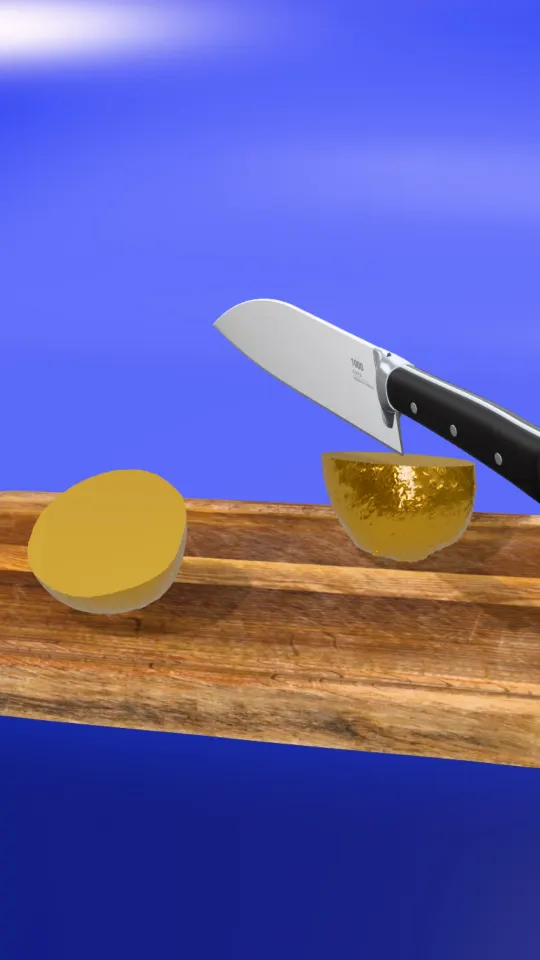
Pause challenge videos are some of the simplest clips on TikTok, Reels and Shorts: a glass fills, a line is drawn on it, and the caption says "pause it when the water hits the line". Yet people stop, try, fail and try again. We make 1000 Cuts, a fruit slicer game, and we watch this format closely because cutting clips fit it perfectly. Here is what the pause challenge is, why it works, and how to make one that is fair.
What is a pause challenge video?
A pause challenge video is a clip that gives you a timing task: stop the video at one exact moment. Common versions are "pause when the knife is in the middle", "stop the clock on 10.00", "pause on the frame with the hidden cat" and "freeze it when the bar is full".
The name is confusing, because there are two quite different "pause challenges":
| The freeze challenge | The "pause it" play-along | |
|---|---|---|
| Who plays | The people in the video | You, the viewer |
| How it works | One person shouts "pause" and the other must freeze | You press pause at the right moment |
| Typical clip | Friends or family at home | A pour, cut, timer or flashing image |
| Length | Often a minute or more | Usually under 15 seconds |
| What makes it fun | Watching someone try not to move | Testing your own reflexes |
The older one is the freeze challenge. According to Know Your Meme, Vine compilations of friends freezing on command were already circulating in 2018, and a Facebook version with a TV remote used to "pause" a friend spread later that year. That is a skit you watch. The newer play-along does nothing until you act, and it is the one this article is about.
Why do pause challenge videos work so well?
They work because they give you a job from the first second. Most clips ask you to watch. A pause challenge asks you to do something, and doing something holds attention better than watching.
There is research on the general idea, though not on TikTok clips. In 2013, Karl Szpunar, Novall Khan and Daniel Schacter reported in PNAS that students watching an online lecture mind-wandered less when short tests were placed between its parts. The lecture became something they had to respond to, not just something playing in front of them. It was one lecture on one topic, and nobody has tested pause clips this way, so treat it as a hint, not proof.
The rest is easy to see from the format itself:
- The goal is clear in one second. A line on a glass needs no explanation, in any language.
- You almost win. Stopping a hair too late feels close enough to try again.
- The result is yours. You did not watch someone else's score, you made your own.
- It is short. At ten seconds, one more try costs nothing.
Why do people rewatch and share them?
People rewatch because missing is part of the game, and they share because a challenge is more fun with someone to beat. "Send it to someone who can't" is the natural ending of a pause clip.
Both actions matter to the apps. TikTok says its For You feed weighs signals such as whether you watch a video to the end, and what you like, share and comment on. Instagram's head, Adam Mosseri, has said that sends in direct messages count slightly more than likes for reaching people who do not follow an account. Nobody outside these companies knows the exact weights, so be careful with any article that claims precise numbers.
A pause challenge fits those signals: short, replayable and made to be sent. Our piece on why satisfying videos go viral covers loops and watch time in more detail.
What makes a good pause challenge?
A good pause challenge is fair, fast and readable. People will try ten times if they believe the target is reachable, and leave straight away if it feels rigged.
- Show the target from frame one. The line, the circle or the number must be visible before the motion starts.
- Make the hit window real. If the perfect moment lasts one frame at 30 frames per second, almost nobody can stop on it. A few frames of tolerance keeps it hard but possible.
- Give a score you can read on a paused frame. "Perfect", "so close" or a number printed on every frame means wherever you stop, you get an answer.
- Give a few chances. Several pours or cuts in one clip let the viewer improve inside a single watch.
- End with an invitation, not a demand. "Did you hit it?" starts a conversation. Begging for follows does not.
Satisfying motion helps: a slow pour or a falling knife is pleasant even when you miss, which is why the format mixes so well with oddly satisfying videos.
Are pause challenges fair, or are some faked?
Most are honest, but some are built so you cannot win. Watch for a target that moves while the clip plays, a "perfect" frame that appears for a single frame, or a score that does not match what you see.
Pausing on a phone also has a small delay: your tap, the app and the screen each add a little lag, so even a perfect reaction lands a moment late. That is part of why "so close" happens so often.
If your twentieth retry has eaten the evening, our guide on how to stop doomscrolling has simple ways to set a limit.
Pause challenges vs a real timing game
A pause challenge is a game squeezed into a video, with one move: stop. A real game lets you act on every moment.
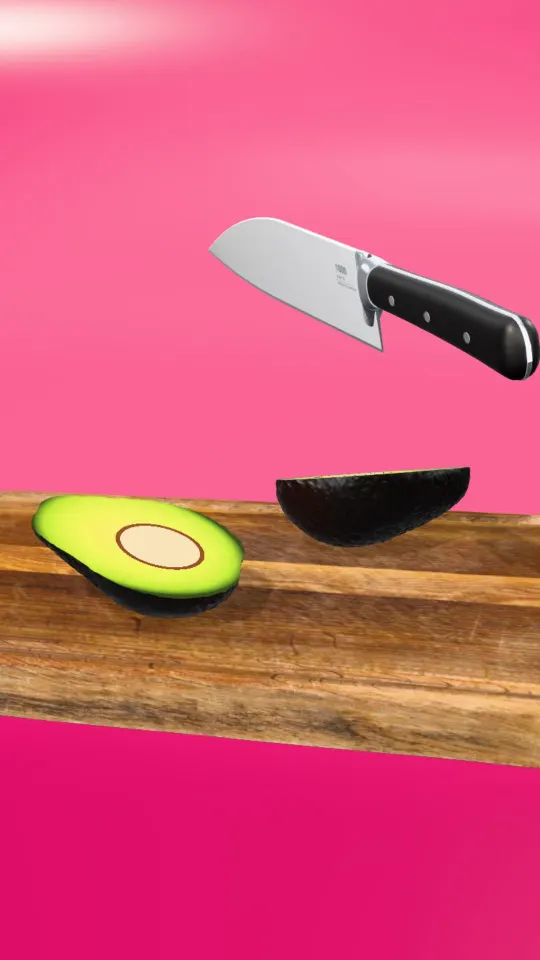
That is the difference between our reels and our game. The "1 cut vs 1,000 cuts" clips from Physics Candy are rendered offline, frame by frame, so the motion is perfect but fixed. 1000 Cuts does the same thing in real time on your phone: you tap to chop exactly where you want, hold and drag to chop fast, and turn the board to dice. When the ⚡ meter fills after 40 chops, one tap makes 1,000 cuts in a blur and the fruit crumbles into a pile. It is a free satisfying game for Android, with ads and optional purchases.
A fruit slicer game gives you the timing feeling on every tap instead of once per video. To see how the rendered clips are made, read how satisfying 3D videos are made.
Frequently asked questions
What is the pause challenge on TikTok?
It usually means one of two things. The older freeze challenge is a skit where one person shouts "pause" and another must freeze. The newer play-along kind asks you, the viewer, to pause the video at an exact moment, such as when water hits a line.
Why can I never pause exactly on the line?
Because of reaction time and lag. Your finger, the app and the screen each add a small delay, so you usually stop a moment late. Fair clips allow a few frames of tolerance for this.
Are pause challenge videos rigged?
Most are not, but some are. Warning signs are a target that moves, a perfect moment that lasts only a single frame, or a score that does not match the picture.
How long should a pause challenge video be?
Short. Most work best under about fifteen seconds, so trying again feels free. Several chances in one clip, such as five pours, also help viewers improve while they watch.
Sources
Szpunar, K. K., Khan, N. Y. and Schacter, D. L. (2013), "Interpolated memory tests reduce mind wandering and improve learning of online lectures", PNAS 110(16): 6313–6317, pmc.ncbi.nlm.nih.gov. TikTok (2020), "How TikTok recommends videos #ForYou", newsroom.tiktok.com. Know Your Meme, "Pause Challenge", knowyourmeme.com. Mosseri's comments on sends as reported by Buffer, "How the Instagram algorithm works", buffer.com.
Updated · By the 1000 Cuts team at DIGCY SARL AU