Micro breaks at work are the tiny pauses most of us take without thinking: refilling a glass, stretching, checking a phone. They feel too small to matter, yet researchers have studied them closely, and the results are more useful (and more modest) than most "productivity hack" posts suggest.
Below: what counts as one, how long and how often to pause, what the studies found, and where a phone game fits in.
What is a micro break?
A micro break is a short, voluntary pause from a task, usually lasting from a few seconds up to about ten minutes. It is different from a lunch break or a day off: you take it during work, often without leaving your desk, and then carry on.
Typical examples are stretching, getting water, looking at something far away, a few slow breaths, a short walk, a chat about anything but work, or one round of a simple game. The common thread is a change: your body, eyes or attention do something different for a moment.
What the research found (and didn't)
The clearest evidence comes from a 2022 meta-analysis in PLOS ONE by Albulescu and colleagues. They pooled 22 study samples with 2,335 participants, looking only at breaks of ten minutes or less.
What they found, in plain words:
| Outcome | What the studies showed |
|---|---|
| Feeling energetic (vigor) | Small but significant increase after micro breaks |
| Feeling tired (fatigue) | Small but significant decrease after micro breaks |
| Task performance overall | No significant improvement |
| Performance on creative or routine clerical tasks | Improved in the studies that tested them |
| Performance on demanding thinking tasks | No improvement |
| Longer breaks within the 10-minute range | Linked with bigger performance gains |
So micro breaks seem good for how you feel. They are not a magic switch for output, especially on hard mental work.
In a 2016 study in the Journal of Applied Psychology, Hunter and Wu followed 95 employees through a workweek, logging almost 1,000 breaks. Breaks taken earlier in the day and spent on activities people actually preferred were linked with more recovered energy. Frequent short breaks and longer breaks both did better than rare short ones.
A 2017 diary study in the Journal of Organizational Behavior by Kim, Park and Niu followed 86 office workers for ten workdays. It grouped break activities into relaxing, eating or drinking, socialising, and "cognitive" activities. The cognitive kind, which is more mental work by another name, made the link between heavy work demands and bad mood worse rather than better.
How long should a micro break be?
There is no single perfect length. The research covers breaks from a few seconds to ten minutes, and nothing in it names a best number. In practice:
- Under a minute: good for eyes and posture. Look away, roll your shoulders, breathe.
- Two to five minutes: enough to stand up, move, get a drink or play one round of something light.
- Up to ten minutes: closer to what the meta-analysis linked with bigger performance gains, and probably better after long stretches of hard thinking.
If you still feel foggy afterwards, you may need a longer break or a proper lunch away from your screen.
How often to take breaks at work
Take them often rather than rarely. Hunter and Wu found frequent short breaks beat infrequent ones, and the Albulescu team did not test a fixed schedule, so any exact rule is a starting point, not a law.
Common starting points:
- Every 20 minutes at a screen: the 20-20-20 rule that eye doctors suggest. Look at something about 20 feet away for at least 20 seconds.
- Every 30 to 60 minutes: stand up and move for a couple of minutes.
- After finishing a chunk of work: a natural stopping point is the easiest time to pause, because nothing is left half-done.
Don't save every break for the afternoon slump: earlier breaks seem to count too.
Which break activities work best?
The pattern across the studies is simple: get away from work, and do something you like.
- Do: move, stretch, drink water, look outside, talk to someone about anything but work, or do a small enjoyable thing with a clear end.
- Skip: checking work email, "just answering one message", or reading something that needs as much focus as the task you left. Kim and colleagues found those mentally demanding activities did not help with bad mood after heavy demands.
- Be careful with: endless feeds. Scrolling has no natural end, so two minutes easily becomes twenty.
Preference matters too: in Hunter and Wu's study, activities people enjoyed were linked with more recovery.
Where a phone game fits in
A short game can be a fine micro break if it is light and has an ending, and a poor one if it is competitive, full of timers or built to keep you scrolling.
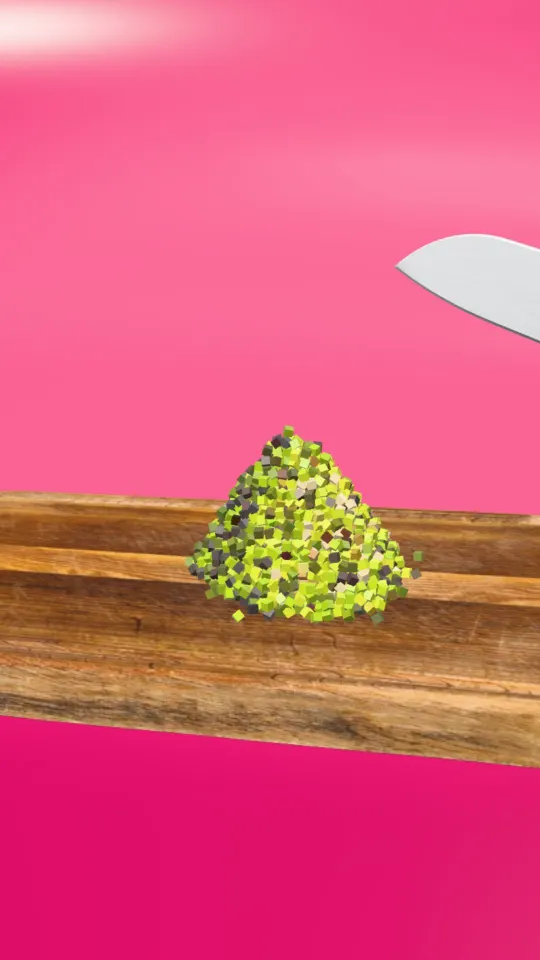
We make 1000 Cuts, a fruit slicer game for Android, so here is our honest take. One fruit is a small, self-contained round: you chop real 3D fruit on a wooden board with real recorded cutting sounds, fill the ⚡ meter with 40 chops, and watch 1,000 cuts crumble it into a pile. That pile is a natural place to stop. What fits less well: every few fruits a short Golden or Holo challenge adds a burst of urgency, and the free version shows a full-screen ad every few fruits.
If you use any satisfying game as a break, the routine in our guide to satisfying games to relax keeps it short: set a timer, play one round, stand up. And if you prefer watching to playing, our explainer on why fruit cutting videos are satisfying covers what makes that kind of clip calm to watch. If your breaks keep turning into long scrolls, our guide on how to stop doomscrolling covers the phone settings that studies found make it easier to put down.
What micro breaks can't do
They will not fix a workload that is simply too big, replace sleep, or make up for skipping lunch. They are not a treatment for burnout, anxiety or any health condition. If you feel exhausted most days, or work is affecting your sleep or mood, talk to your manager about the workload and to a doctor or mental health professional about how you are feeling.
What they can do is make an ordinary day a little easier: fewer stiff shoulders, fewer tired eyes, a moment to yourself between tasks.
Frequently asked questions
What is a micro break at work?
A short pause from a task, from a few seconds to about ten minutes, taken during the workday, like stretching, getting water or a short walk.
How long should a micro break be?
Anything from a few seconds to ten minutes. Short pauses suit eyes and posture, while breaks closer to ten minutes were linked with bigger performance gains in a 2022 meta-analysis.
How often should you take a micro break?
Often. Frequent short breaks were linked with more recovered energy than rare ones; many people look away every 20 minutes and stand up every 30 to 60.
Do micro breaks improve productivity?
Not reliably. Research found micro breaks helped people feel more energetic and less tired, and helped on creative and routine tasks, but did not improve performance on demanding thinking tasks.
Is playing a game on your phone a good micro break?
It can be, if the game is light, has a clear ending and you set a time limit.
Sources
- Albulescu P. et al. (2022). "Give me a break!" A systematic review and meta-analysis on the efficacy of micro-breaks for increasing well-being and performance. PLOS ONE. Link
- Hunter E. M. & Wu C. (2016). Give me a better break: Choosing workday break activities to maximize resource recovery. Journal of Applied Psychology, 101(2), 302–311. Link
- Kim S., Park Y. & Niu Q. (2017). Micro-break activities at work to recover from daily work demands. Journal of Organizational Behavior, 38(1), 28–44. Link
- American Academy of Ophthalmology. Eye strain: how to prevent tired eyes. Link
Updated · By the 1000 Cuts team at DIGCY SARL AU