A hydraulic press slowly lowers onto a bowling ball. Nothing happens, then a crack, then it bursts. You did not need to know what happens to a bowling ball under a press. You watched anyway, probably twice.
So why do we like watching things get destroyed? Crushing, shredding, blending and slicing videos have been part of the internet since the early days of YouTube, and they still fill feeds today. This guide explains the six main reasons in plain words, separates what research has found from what is just a good theory, and clears up the "rage room" myth.
Destruction videos are older than TikTok
Destruction videos have been around almost as long as online video itself. Business Insider traced the trend back to October 2006, when Blendtec's "Will It Blend?" series started putting household objects into a blender as a marketing stunt.
Microwave experiments and shredders followed. In October 2015, Lauri Vuohensilta started the Hydraulic Press Channel from his workshop in Tampere, Finland, and crushing things under a press became its own genre. In 2023, TikTok had a wave of bottles thrown down stairs and objects smashed for the camera.
Reason 1: curiosity about how things break
The first reason is simple curiosity. Most of us have never seen what is inside a golf ball, how a crayon shatters, or what an apple looks like after a thousand cuts. A destruction video answers a question you did not know you had.
Writing for BBC Science Focus, cognitive neuroscientist Christian Jarrett points to curiosity and awe: we wonder how long an object will last and what it will look like as it breaks. There is a quiet science lesson in it too. Paper, rubber and glass all fail in different ways, and seeing it is more fun than reading about it.
Reason 2: suspense, then release
Destruction videos are built on tension. The press moves down slowly. The object bends, resists, bulges. You know something is coming, but not exactly when or how.
In a 2016 Vice interview, the channel's creators agreed when the interviewer compared press videos to pimple-popping clips: build-up, tension, then payoff. That release is the payoff that makes you stay to the end, and often replay it.
Reason 3: a feeling of control and power
Jarrett suggests that feeling in control is a basic human need, and that deliberately destroying something can feel good because it makes us feel powerful. Watching a machine that cannot lose against a stubborn object is a small, clean dose of that feeling. Note that this is a theory, not a measured result. No study we found has tested it on destruction videos directly.
Reason 4: safe danger and morbid curiosity
Humans pay attention to danger. Breaking glass, crushing force and sharp blades are things we would avoid in real life, and a video lets us look closely without any risk.
Psychologist Coltan Scrivner calls this morbid curiosity: a motivation to find out about dangerous things. In a 2021 paper in Personality and Individual Differences, he built and tested a questionnaire to measure it across several studies. It is about learning, not enjoying harm, and a press flattening a toy is about the gentlest version there is.
Reason 5: a clear ending
Every good destruction video has a finish line you can feel coming. Whole object at the start, flat disc or pile of pieces at the end. Nothing is left unresolved.
That is the same "whole to finished" pattern we described in why fruit cutting videos are so satisfying. The pile at the end works like a full stop.
Reason 6: sound
Crunch, crack, pop and squelch carry a lot of the appeal. Many creators record close-up audio and keep music quiet so you hear every snap. Some viewers even tag destruction clips as ASMR.
If sound is the part you love most, our guide to cutting ASMR sounds explains why crisp sounds feel good and what research has found about crunch.
Crushing, shredding and slicing: what each one offers
Different kinds of destruction video lean on different reasons.
| Type | Main hook | Typical ending |
|---|---|---|
| Hydraulic press | Slow suspense, surprise | A burst or a flat disc |
| Shredder | Rhythm, steady progress | A pile of strips |
| Blender | "Will it survive?" curiosity | Powder or soup |
| Slicing and dicing | Precision, sound, reveal | A neat pile of pieces |
| Smashing (glass, bottles) | Shock, loud sound | Scattered shards |
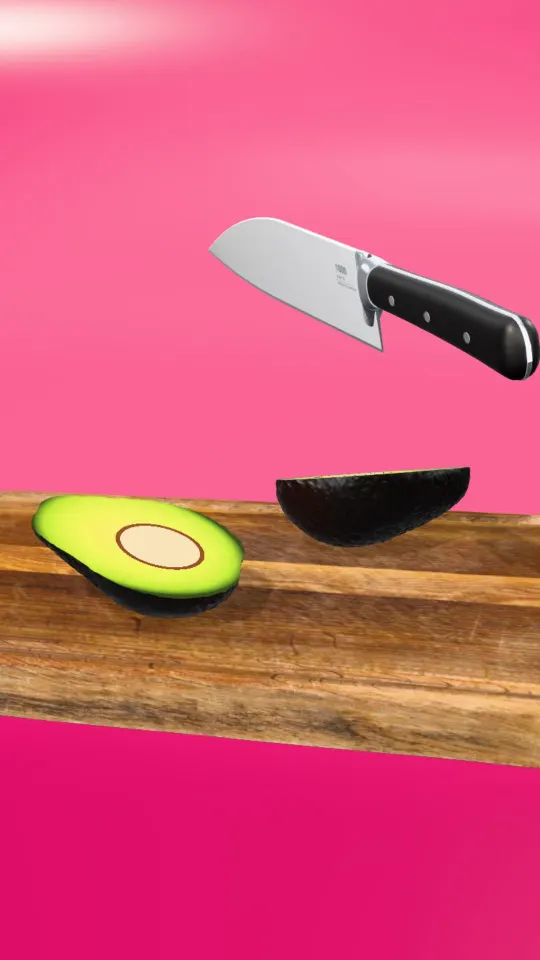
Slicing is the calmest of the group: nothing explodes, the object is taken apart in small, controlled steps. That is why fruit cutting sits closer to oddly satisfying than to ASMR or pure destruction.
The rage room myth: does breaking things let anger out?
No. The research does not support it. The idea that smashing things "lets the anger out" is called catharsis, and it is popular, but studies keep failing to back it up.
In 2024, Sophie Kjærvik and Brad Bushman published a meta-analysis in Clinical Psychology Review that pooled 154 studies with around 10,000 people. Activities that raise arousal, like hitting a bag or going for a run, did not reliably reduce anger. Activities that calm the body down, like slow breathing, relaxation and mindfulness, did.
So enjoy a crushing video or a rage room as entertainment, and nothing more. If anger or low mood is getting in the way of your life, a game or a video is not a fix. Talk to a doctor or a mental health professional.
Destruction you can control yourself
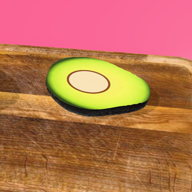
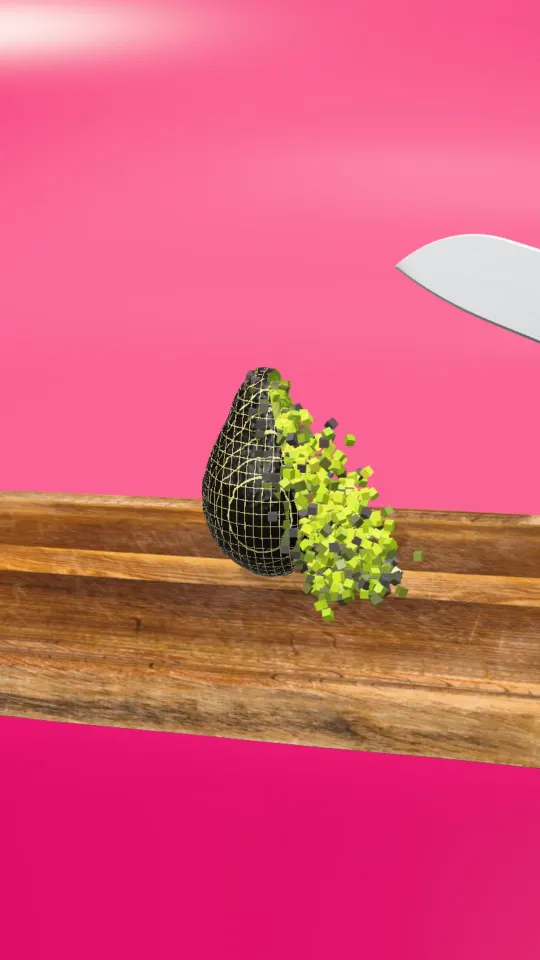
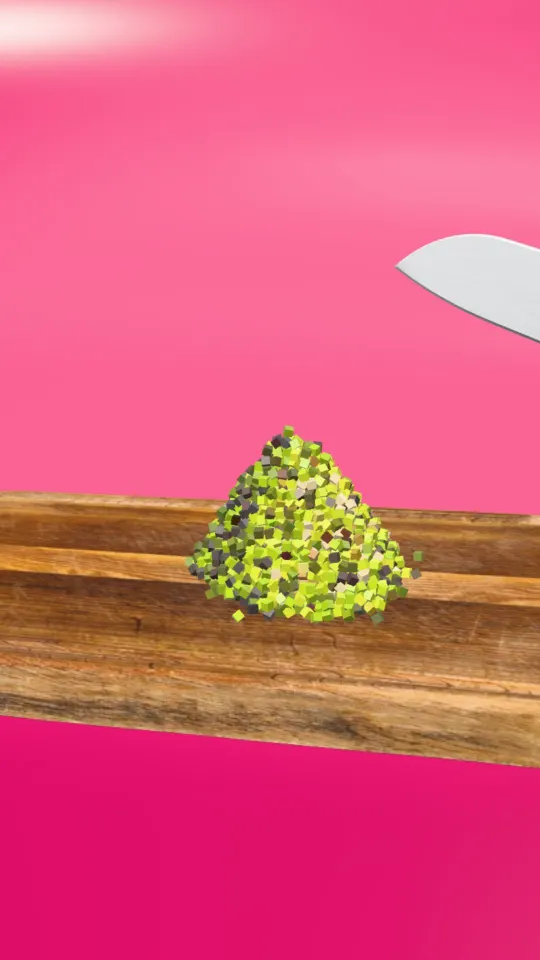
We make 1000 Cuts, a fruit slicer game for Android that does the slicing version of this in real time. Tap to chop exactly where you touch, hold and drag to chop fast, and turn the board with ⟲ ⟳ to dice. When the ⚡ meter fills after 40 chops, one tap makes 1,000 cuts in a blur and the fruit crumbles into a pile.
Our "1 cut vs 1,000 cuts" reels from Physics Candy are rendered offline, frame by frame. The game is the live, real-time version you control. It is free with ads and optional purchases. You can see all the knives on the home page.
Frequently asked questions
Why is it satisfying to watch things get crushed?
Because it combines suspense, curiosity and a clean payoff. You wait to see when the object gives, you learn how it breaks, and the video ends with a clear result, all with no risk to you.
Is it weird to enjoy destruction videos?
No. Enjoying them is very common, and psychologists describe a normal "morbid curiosity" about dangerous things.
Do rage rooms help with anger?
Research does not support it. A 2024 meta-analysis of 154 studies found that arousing activities like hitting things did not reliably reduce anger, while calming activities such as slow breathing did. Treat rage rooms as entertainment.
Why are hydraulic press videos so popular?
They are simple and suspenseful. A slow press, a stubborn object and a surprise at the end make a short story with a payoff. The Hydraulic Press Channel helped make the format famous after it started in 2015.
Sources
Jarrett, C., "Why is destruction so satisfying?", BBC Science Focus, sciencefocus.com. Lloyd, A. (2023), "Videos of people destroying things took over TikTok in 2023", Business Insider via Yahoo News. Scrivner, C. (2021), "The psychology of morbid curiosity", Personality and Individual Differences 183: 111139, doi.org. Kjærvik, S. L. and Bushman, B. J. (2024), "A meta-analytic review of anger management activities that increase or decrease arousal", Clinical Psychology Review, pubmed.ncbi.nlm.nih.gov. Christian, J. (2016), interview with the Hydraulic Press Channel, Vice, vice.com. Hydraulic Press Channel, Wikipedia.
Updated · By the 1000 Cuts team at DIGCY SARL AU